
Apprenticeships
Apprenticeships subtitle



Where are we now?
The apprenticeship dashboard displays apprenticeship starts over the past five years. Data is structured and filterable by the seven broad categories which align to the sectors which are deemed to have the highest intensity of green jobs: Automotive, Construction and Building Services, Electrical Installation, Energy and Utilities, Engineering (including Electrical Engineering), Environmental Services and Manufacturing.
The report picks up enrolments to a list of green apprenticeship standards identified as relevant from the knowledge and skills specification documents and cross referenced to the Skills England dark green and mid green classification published in the Skills England occupational maps.
The green apprenticeship standards with significant numbers of starts are predominately ‘secondary green’ and appear to be less ‘focused green’ than courses delivered to adults through the Adult Skills Fund. The apprenticeship knowledge, skills and behaviours appropriate for initial training in an occupation typically cover a broad range of themes with green specific skills often being only a small part (e.g. Motor Vehicle Technicians would be gaining skills across all types of vehicles not just electric/hybrid cars).
- Automotive apprenticeships fell further putting the West Midlands in the bottom half of the national table.
- Construction and Building Services apprenticeship starts in the region are low and compare poorly with other areas of England.
- The West Midlands region near the bottom of the national table for Electrical Installation apprenticeships, compared with being at the top for Electrical Installation courses for adults.
- There is a growing and high number of Engineering and Electrical Engineering apprentices in the West Midlands which ranks second nationally when compared to other regions.
- There has been recent strong growth in green Manufacturing apprenticeships, though numbers are relatively low.
- Apprenticeship starts in Energy and Utilities and Environmental Services are very low regionally.
Key data
Automotive
After a few years of stability, the level of participation in pipeline apprenticeships in Automotive declined by a further 10% in 2024/25 to 563.
When compared to other regions nationally, the West Midlands slipped from second position in 2023/24 to sixth position in 2024/25, with 15 automotive apprentices per 100,000 of population.
The proportion studying at college increased to 45% and 67% of apprenticeships are at level 3. Almost all apprentices are enrolled to the Motor Vehicle Service and Maintenance Technician or Autocare Technician apprenticeships.
94% of Automotive apprentices are under 24, with 63% under 19
92% of Automotive apprentices are male, down from 94% in 2023/24

Construction & Buildings Services
The West Midlands has relatively low levels of participation in pipeline apprenticeships in construction and building services and remains near the bottom of the national table.
Participation is reasonably distributed across the region. The number of construction and building services apprenticeship starts in 2023/24 was 393 representing a small increase in an overall stable pattern.
80% of apprentices study at a college and around 60% are at level 3. The most prevalent apprenticeships are Plumbing and Domestic Heating Technician and Property Maintenance Operative.
Construction and Building Services apprentices are almost all male and white and 87% are under 25.
5% female participation in construction and building services apprenticeships
10% from diverse ethnic backgrounds

Electrical Installation
The West Midlands has relatively low levels of participation in pipeline apprenticeships in electrical installation and is ahead only of London and the East of England. In 2024/25 the volume was 760 apprenticeships, which is typical of the engagement over the past few years. This low level contrasts with the area’s performance in adult skills funded electrical installation courses, where the West Midlands ranks top nationally.
Almost all apprentices were enrolled to the level 3 Installation and Maintenance Electrician programme and nearly half learned at a college. 51% of apprentices are 18 or under.
3% of Electrical Installation apprentices are female
12% of Electrical Installation apprentices are from diverse ethnic groups
Energy & Utilities
The West Midlands’ level of participation in pipeline apprenticeships in energy and utilities is comparable with other regions. The year-on-year numbers increased slightly to 73 in 2024/25, the highest level in 3 years. This represents two in every 100,000 of working age population. The top performing areas nationally, with 3 per 100,000, are Yorkshire and the Humber, the Northeast and the East Midlands.
A small, but growing proportion (16%) are supported by a college.
The principal standards are Electrical Power Network Engineer and Power Networks Craftsperson.
Engineering including Electrical Engineering
Engineering (Including Electrical Engineering)
In 2024/25 the number of apprenticeship starts in the engineering/electrical engineering sector in the West Midlands bounced back up to 1,638, the highest level in five years.
The proportion of apprentices supported at college is now down to 20%, while those learning through other publicly funded organisations increased to 50%, largely due to the high numbers of learners with the RAF.
Engineering Technician remained the top qualification, followed by Aircraft Maintenance Technician, which had no enrolments in 2023/24. 44% of engineering apprentices are in the Shropshire region and there was strong participation in Birmingham, Coventry and Dudley.
The West Midlands region remained in second nationally in terms of number of engineering apprenticeship starts with 44 engineering apprentices per 100,000 of population. The Southwest remained in the top position.
Since 2023/24 there has been an increase in diversity in participation. An increase of 8% in female apprentices and an increase of 6% in representation from diverse ethnic backgrounds. Half of apprentices are aged 16-18.
11% female participants in engineering/electrical engineering
18% from diverse ethnic backgrounds

Environmental Services
In 2024/25 the number of apprentices in environmental services remained low but stable at 106. There were comparable low levels of participation across other regions nationally, with most showing 3 apprentices per 100,000 of population. However, the Southwest region bucked the trend with double this penetration rate in 2024/25.
Colleges do not participate in environmental services apprenticeships. 80% of provision is supported by private providers and the remaining 20% by the HE sector. Predominantly, apprentices study at levels 2 to 4 but 25% are degree apprentices in environmental practitioners.
The majority of standards were for the water industry and Water Process Operative was the most popular standard with 33 on this standard in 2024/25. The number on the Corporate Responsibility and Sustainability Practitioner standard rose to 28 in 2024/25.
58% of apprentices in environmental services were aged 25+

Manufacturing
The West Midlands has strong levels of participation in pipeline apprenticeships in manufacturing, in common with other regions, and now ranks second nationally after the North East.
The number of apprentices in the manufacturing sector rose by 22% to 225 in 2024/25, continuing the healthy growth trend since 2022/23. Apprentices in the manufacturing sector are split roughly equally across colleges, private providers and HE institutions.
Almost half (47%) of manufacturing apprenticeships are at degree level and a further 32% are at level 4. The most popular standards were Engineering Manufacturing Technician and Manufacturing Engineer which had 81 and 71 enrolments respectively.
It is likely that apprentices employed in manufacturing industries are taking other broader subjects such as Engineering apprenticeships rather than specific Manufacturing apprenticeships.
Participation by females remains low, despite a 2% increase in 2024/25. Representation of apprentices from diverse backgrounds increased by 7% over the same period.
13% female participants in manufacturing apprenticeships
26% from diverse ethnic backgrounds

Explore the data
Click here below to choose your sector
Case Studies
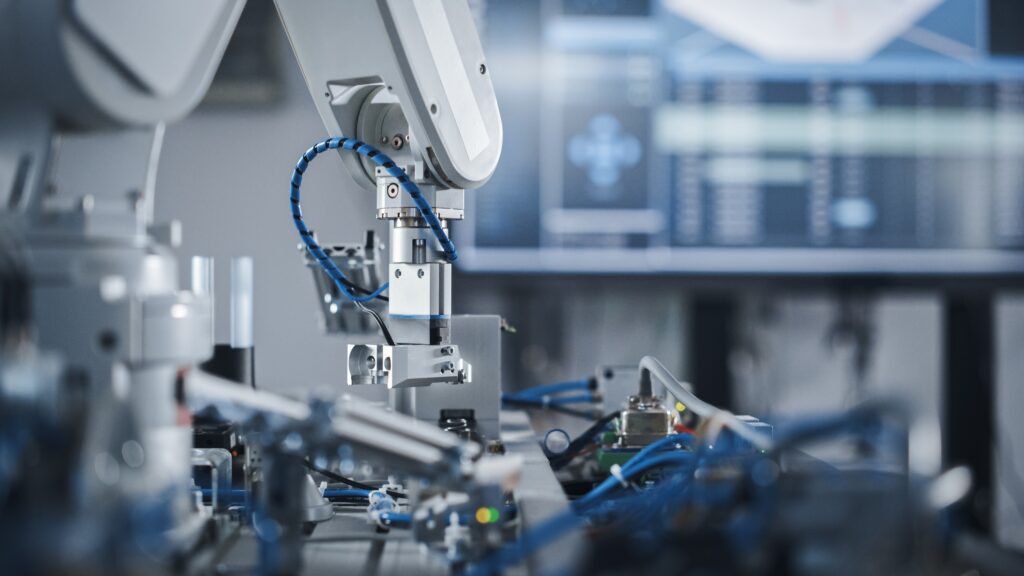
The manufacturing sector in the West Midlands is crucial to the region’s future economic success. With the push for a greener future, manufacturing and engineering companies are evolving towards more sustainable practices and the use of cleaner energy sources. To meet their future training needs, colleges must stay abreast of technological advancements in areas such as battery technology, electrification, and hydrogen power. Collaboration between WMG at the University of Warwick and West Midlands colleges has resulted in the development of a region-wide electrification strategy. The strategy includes the development and roll out of specialised training programmes to upskill over 300 college staff in areas like electro-pneumatics and lithium-ion battery recycling. Colleges are also tapping into the benefits of fellowship schemes connecting further education lecturers with higher education colleagues.
Higher education is often focused on providing solutions to capability challenges faced by industry. But the reality is that further education colleges do, and will continue to, play a much more important role in delivering re-skill and up-skill opportunities to industry. WMG views the support and development of colleges as critical.
Dr Benjamin Silverstone - Associate Professor, Workforce Transformation Strategy and Policy, at WMG